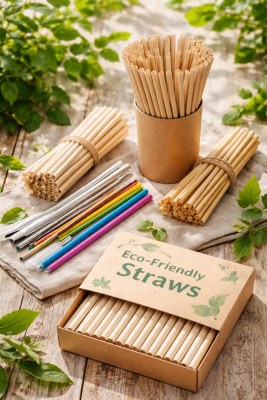
Eco‑Friendly Straws Market Future Trends (2025‑2031)
-
The Eco‑Friendly Straws Market is projected to experience notable transformation and sustained expansion from 2025 to 2031, driven by environmental imperatives, regulatory actions, evolving consumer behaviour, and novel innovations in sustainable materials. According to research from The Insight Partners, the market value is expected to grow from approximately US$ 10.46 billion in 2024 to an estimated US$ 20.81 billion by 2031, with a robust compound annual growth rate (CAGR) of around 10.3% during the 2025‑2031 forecast period.
Growing Influence of Social Media and Sustainability Awareness
A defining trend shaping the future of the eco‑friendly straws market is the increasing influence of social media on consumer awareness and purchasing choices. Platforms such as Instagram, TikTok, and Facebook are amplifying sustainability narratives, encouraging eco‑conscious lifestyles, and highlighting the impact of plastic waste on the environment. Visually engaging content showcasing aesthetically crafted beverages with eco‑friendly straws, sustainability challenges, and influencer campaigns create social proof that strengthens market adoption. As consumers share and engage with content focused on environment‑friendly habits, demand for sustainable alternatives to plastic straws is likely to rise significantly through 2031.
Expansion Driven by Regulatory Initiatives
Government policies and regulations aimed at reducing single‑use plastics remain one of the most critical drivers influencing future market trends. Worldwide legislative frameworks that restrict or ban plastic straws are compelling businesses to adopt biodegradable alternatives such as paper, bamboo, bagasse, and polylactic acid (PLA) straws. These regulatory pressures evident in markets across Europe, Asia Pacific, and North America are forcing quick service restaurants, cafes, hotels, and other food service businesses to transition away from conventional plastic. The influence of these policies is expected to persist as more nations adopt stringent waste management targets, thereby sustaining long‑term demand for eco‑friendly straw solutions.
Request Sample Pages of this Research Study @ https://www.theinsightpartners.com/sample/TIPRE00010209
Innovation in Sustainable Materials
Technological advancement and materials innovation constitute a significant future trend. Manufacturers are focusing on improving functionality, durability, and environmental performance without compromising usability. Notable developments include:
- Water‑resistant coatings for paper straws to improve longevity.
- Advanced biodegradable polymers such as enhanced polylactic acid (PLA).
- Novel natural materials such as bamboo, bagasse, and other plant‑based composites.
These developments aim to reduce degradation time, improve straw integrity in beverages, and deliver sustainable profiles that align with consumer expectations. As innovations continue, eco‑friendly straws are likely to penetrate new applications beyond food service, such as consumer retail packs and beverage distribution channels.
Shift in Consumer Behaviour and Lifestyle Choices
Consumer awareness of environmental issues is influencing purchasing patterns and lifestyle choices on a global scale. With sustainability increasingly associated with personal values and brand loyalty, consumers are more likely to support businesses that demonstrate environmental responsibility. This trend is particularly strong among younger demographics who prioritize green products and sustainable packaging solutions. As public pressure grows to minimise plastic waste, demand for biodegradable and reusable straw alternatives is expected to accelerate through the forecast period.
Quick Service Restaurants and Hospitality Sector Adoption
Another key future trend is the accelerated adoption of eco‑friendly straws by quick service restaurants (QSRs) and the wider hospitality sector. Food service operators increasingly leverage sustainability as a competitive advantage to differentiate their brand image and appeal to environmentally minded customers. Many industry players are integrating sustainable packaging as a core aspect of their corporate social responsibility initiatives. This shift benefits both consumer perception and operational sustainability goals — reducing plastic waste, lowering environmental impact, and contributing to broader climate targets. Continued partnerships between straw manufacturers and food service chains are expected to strengthen market expansion in the coming years.
Regional Growth Dynamics
Regional trends also play a crucial role in shaping the eco‑friendly straws market:
- Asia Pacific is expected to exhibit one of the fastest CAGR rates, driven by increasing regulatory pressures, rising disposable incomes, expanding food service sectors, and heightened environmental consciousness among consumers.
- North America benefits from strong social media influence and widespread consumer engagement in sustainability campaigns.
- Europe continues to lead in adoption owing to strong environmental laws, high consumer awareness, and established sustainability initiatives across food and retail sectors.
These regional dynamics reflect divergent yet complementary demand patterns that collectively support long‑term market growth and diversification.
Competitive Innovation and Strategic Collaboration
A future trend that will shape market competitiveness is strategic collaboration and product innovation among leading manufacturers and suppliers. Companies are expected to broaden their product portfolios, invest in research and development, and adopt strategic partnerships to enhance technology capabilities and market reach. Actions such as capacity expansions, joint ventures, and collaborative sustainability projects are anticipated to foster competitive advantages and expedite entry into new geographic and niche markets.
Environmental Certification and Quality Assurance
As environmental concerns influence purchasing decisions, certifications, quality assurances, and sustainable labelling are becoming crucial to consumer trust. Brands that achieve recognised eco‑certifications or engage in transparent, credible sustainability reporting are positioned to attract greater market share. Certifications related to biodegradability, compostability, and minimal carbon footprint will become part of product differentiation and a future trend that reinforces consumer confidence.
Trending Related Reports:
- Paper Straw Market Analysis and Forecast by Size, Share, Growth, Trends 2031
- Drinking Straw Market Analysis and Forecast by Size, Share, Growth, Trends 2031
- Eco-Friendly Water Bottle Market Growth, Trends & Forecast by 2034
About Us:
The Insight Partners is a one stop industry research provider of actionable intelligence. We help our clients in getting solutions to their research requirements through our syndicated and consulting research services. We specialize in industries such as Semiconductor and Electronics, Aerospace and Defense, Automotive and Transportation, Biotechnology, Healthcare IT, Manufacturing and Construction, Medical Device, Technology, Media and Telecommunications, Chemicals and Materials.Contact US:
If you have any queries about this report or if you would like further information, please contact us:
Contact Person: Ankit Mathur
E-mail: sales@theinsightpartners.com
Phone: +1-646-491-9876Also Available in : Korean | German | Japanese | French | Chinese | Italian | Spanish